- Home
- About us
- Products
- Terminal Crimping Machine
- Fully auto crimp solder seal
- Semi auto Terminal Crimp Machine
- Cable/Wire Cutting and Stripping Machine
- Cutting Machine
- Tape Bunding Machine
- Cable Winding and bunding Machine
- Inserting Heat Shrink Tube Baking Machine
- Connector Nut Screwing Machine
- Others
- Heat Shrink Baking Machine
- Pay-off rack
- Copper busbar peeling machine
- Nylon cable tie bunding machine
- Copper Foil Wrapping Machine
- Welding Machine
- Cutting and Punching Machine
- Tin Dipping Machine
- Shielded Mesh Brushing, Turning & Cutting Machine
- NTC Resistor Arranging & Welding Machine
- Fully‑automatic welding & housing‑inserting machine
- Protector Welding Machine
- Faqs
- News
- Certificate
- Contact us
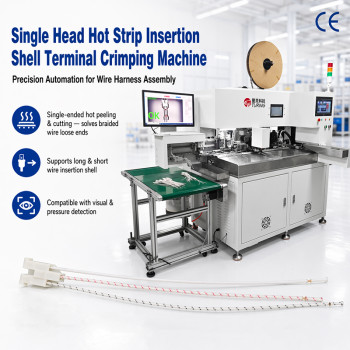
TR-DX01 Fully automatic single head hot stripping and plugging plastic shell terminal crimping machine


- group name
- Plastic Shell Terminal Crimping Machine
- Min Order
- 1 piece
- brand name
- Turing
- model
- TR-DX01
- Nearest port for product export
- Yantian, Huangpu, Shekou, Nansha
- Delivery clauses under the trade mode
- FOB, CFR, CIF, EXW, FCA, DDP, Express Delivery
- Acceptable payment methods
- T/T, MoneyGram, Westem Union, Cash
- update time
- Fri, 24 Jul 2026 15:22:16 GMT
Paramtents
Power AC220V/50HZ,
Application Wire Sheath Insertion and Rubber Shell Terminal
Feature Stable Performance
Warranty 1year
Control Servo and Step motor
Contact Coco 0086-18666170785
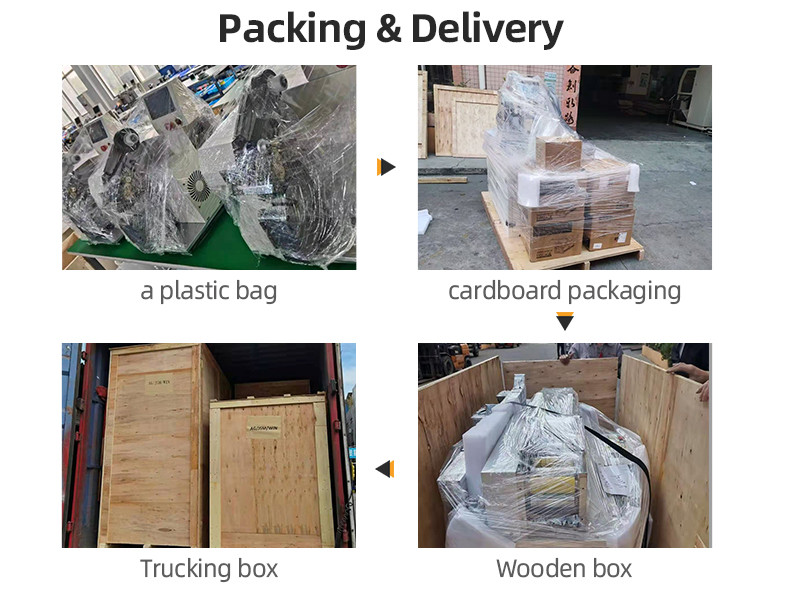
Packging & Delivery
-
Min Order1 piece
Briefing
TR-DX01 Fully automatic single head hot stripping and plugging plastic shell terminal crimping machine
Detailed
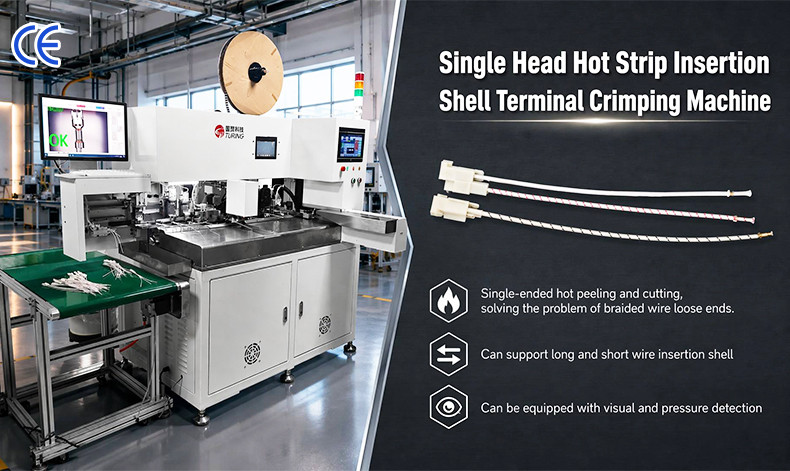
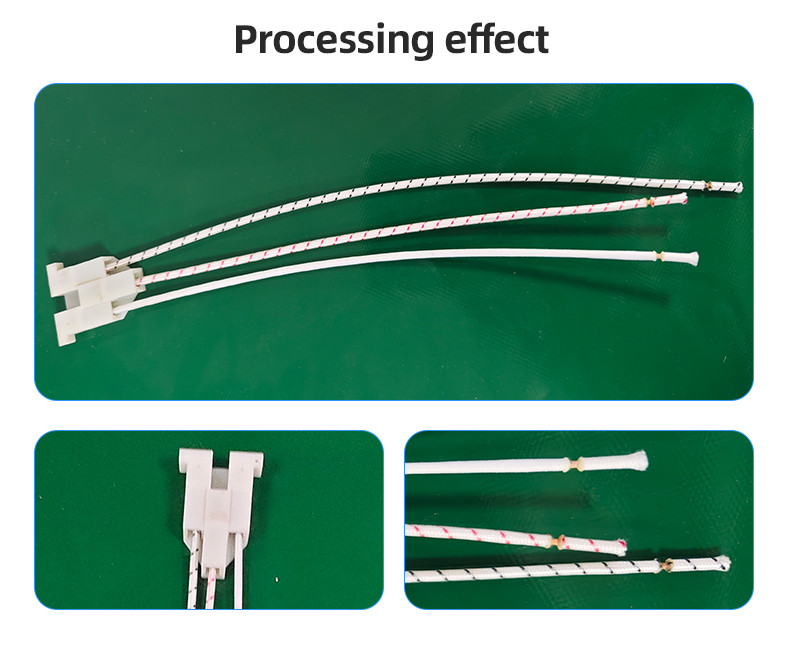
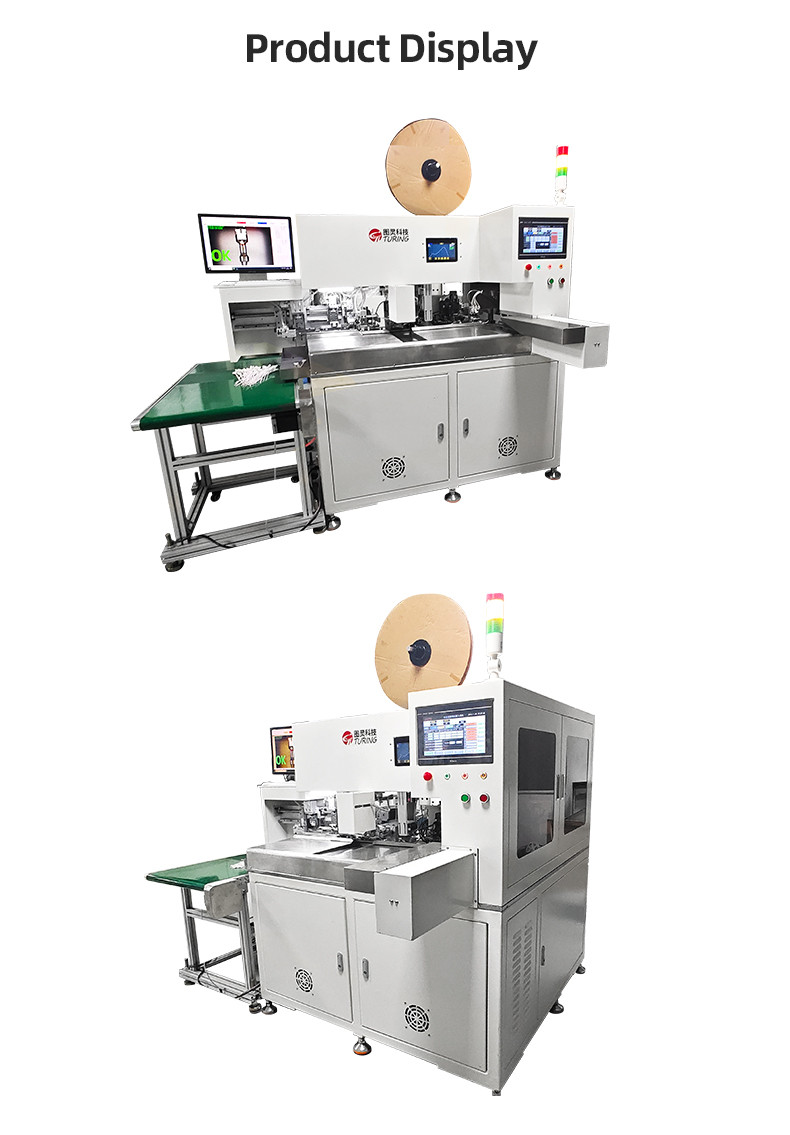
TR-DX01 Single Head Hot Strip InsertionShell Terminal Crimping Machine
Product Highlights
1.Hot Stripping Process Solves Braided Wire Fraying Issue
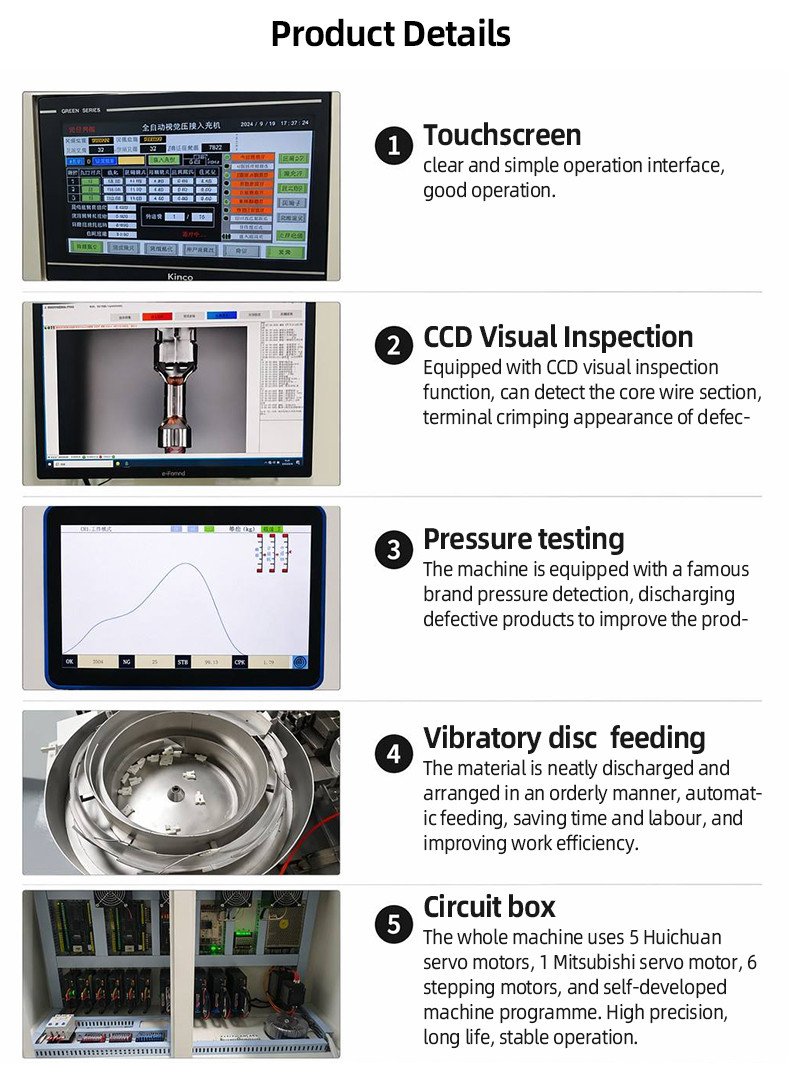
Adopts single-end hot stripping & hot cutting technology to effectively prevent braided wire ends from fraying; compatible with both long and short wires for housing insertion.
2.All-in-One Automatic Process with High Productivity
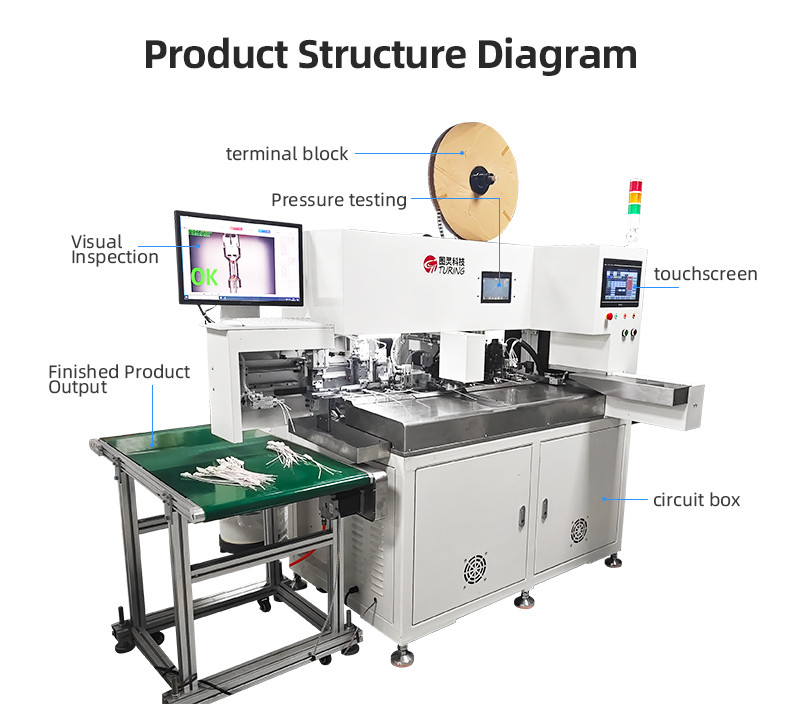
Integrates wire cutting, end stripping, terminal crimping, high-temperature hot marking, single-side housing insertion and good/bad product sorting. Output reaches 500 pieces per hour.
3.Dual Inspection System Ensures High Yield Rate
Equipped with CCD visual inspection + crimping force monitoring system, automatically rejects defective products such as poor crimping, missing terminals and exposed conductors.
4.High Precision & Stable Performance with Imported Key Components
Configured with Mitsubishi and Inovance servo motors, achieving ultra-tight tolerance for cutting and stripping. Durable structure ensures stable long-term operation.
5.Wide Compatibility & Customizable Solution
Covers wire gauge AWG#20~#28. Widely applied in automotive, home appliance, aerospace, new energy and communication wiring harness industries; non-standard customization available.
Why Choose Us?
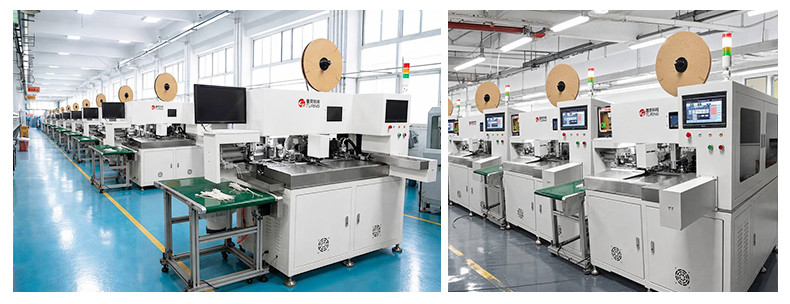
1.Industry Expertise: 18 Years of Focus (Since 2008) with 50,000+ units delivered worldwide.No more instability. Partner with a legacy brand that understands the DNA of wire processing.
2.Production Scale: 2,500+ Units/Month capacity (500+ Auto-lines, 1000+ Semi-auto).No project delays. Massive throughput ensures we meet your tightest production deadlines.
3.Rapid R&D: 3-7 Days Prototyping for custom tooling based on your unique CAD/3D drawings.Unmatched flexibility. Rapid customization for complex, non-standard wire harness structures.
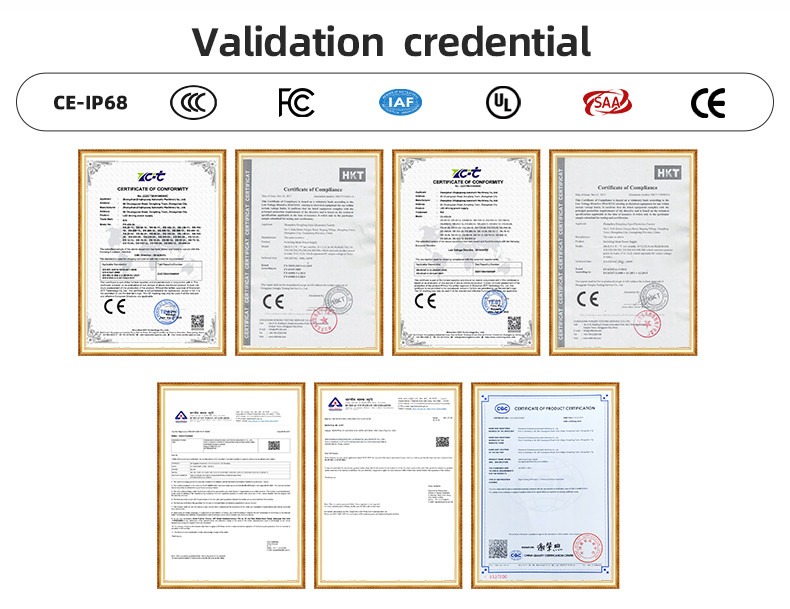
4.Global Compliance: 100% CE Certified & ISO9001:2015 quality management system.Seamless import. Our machines meet international safety standards (UL/RoHS/CE) for global markets.
5.Economic ROI: 6-Month Payback Period average ROI by replacing 4-6 manual operators. Cost efficiency. Transform your labor costs into high-margin automated productivity.
6.Global Footprint: 112 Countries Reached with 24/7 technical support in 10+ languages. Lifetime support. Reliable remote video diagnostics and lightning-fast spare parts delivery anywhere.
Equipment Name | TR-DX01Single Head Hot Strip Insertion Shell Terminal
Crimping Machine | |
Power Supply | Single phase AC200V/220V 50HZ 10A | |
Size & Weight | W1600×D1700×H1600mm / approx. 750kg | |
Efficiency | 500PCS/H | |
Wire Size | AWG#20~#28 (wire OD#2.5mm or less) | |
Wire colour | 1-3 colours | |
Wire cut length | 55mm~300mm (Setting 0.1mm unit) (Expandable) | |
Cutting length
accuracy | Tolerance ±0.5mm | |
Peel | 1.0mm — 10.0mm | |
Peeling length
accuracy | Tolerance ±0.1mm | |
Press machine | 19000N (2T equivalent) | |
Universal Mould | Universal OTP Terminal Mould | |
Compressed air | 0.5MPa, approx. 170N/min | |
Temperature | 15℃ ~ 30℃ | |
Humidity range | 30%-80%RH No condensation | |
Control method | electronic control | |
Warranty period | 2000h or 1 year (except consumables) | |
Function | Wire cutting, one-end peeling, single-end pressing,
high-temperature ironing, one-side insertion,
good/bad product selection and discharging | |
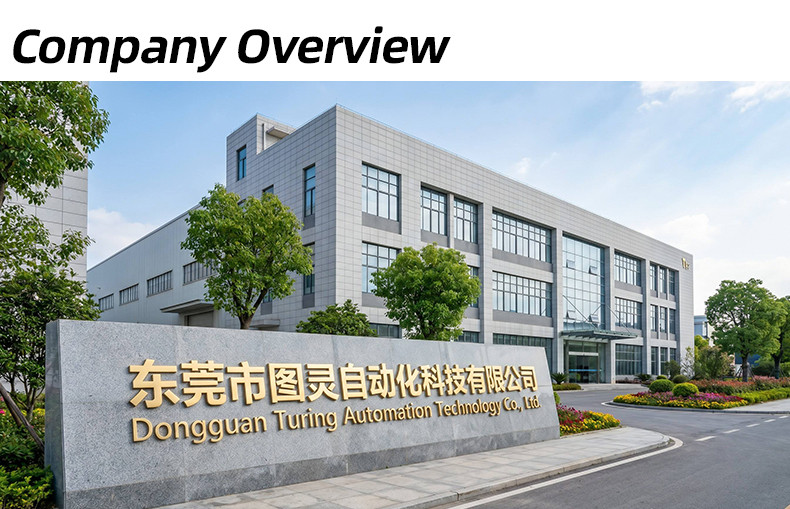
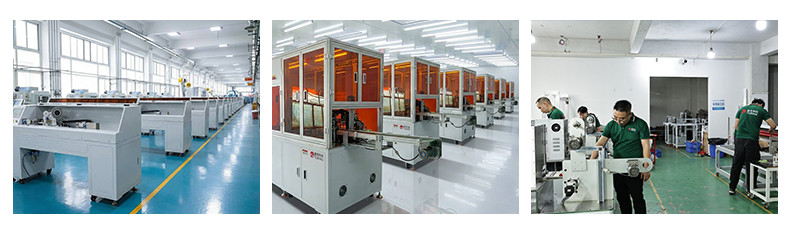
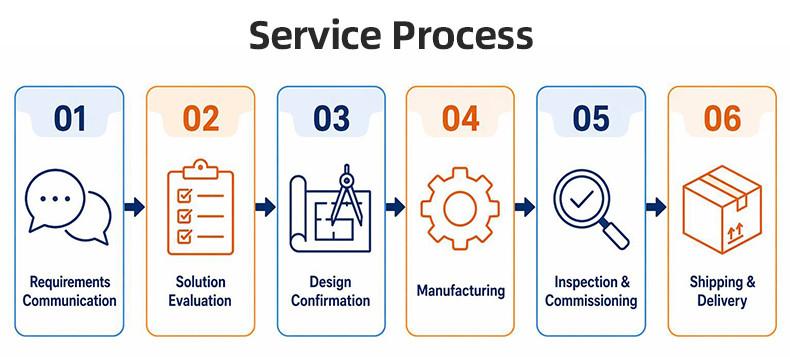
Dongguan Turing Automation Technology Co., Ltd. was established in 2008, located in Dongguan City, Guangdong Province. The company specializes in the production of: automatic terminal embossing machine, automatic terminal embossing tinning machine, ultra-quiet energy-saving terminal machine, mute copper tape machine, computerized wire cutting and stripping machine, coaxial stripping machine, automatic nylon zip tie machine, automatic winding and bundling machine, heat shrinkable tube computerized pipe cutting machine, terminal machine molds, knife molds and new energy automation wiring harness processing equipment and so on. Mainly serves in the automobile and motorcycle, electronics, home appliances, electrical and other wiring harness processing enterprises electrical.
We have rich industry experience and are a reliable supplier. Our holding/co-operating factories have advanced production equipment and skilled frontline staff. Knowing that the development of our company depends on the innovation and quality of our products, we have established a quality management system that meets the requirements of the international quality management system. We constantly launch original innovations according to market and customer needs, always keep the novelty and innovation of our products, and think what our customers think and what they are anxious about. Providing customers with excellent service and meeting their needs is our eternal pursuit!
FAQs
1. What makes the TR-DX01 different from a standard terminal crimping machine?
Conclusion: It is an all-in-one workstation that integrates Hot Stripping, Crimping, and Automatic Housing Insertion.
Detail: A standard machine only cuts, strips (mechanically), and crimps. The TR-DX01 goes two steps further: it uses heat to strip the wire (protecting the conductor) and then automatically plugs the crimped terminal into a plastic connector housing. This eliminates the most labor-intensive part of wire harness assembly.
2. What are the advantages of "Hot Stripping" (Thermal Stripping)?
Conclusion: It provides non-destructive stripping for high-precision or difficult-to-strip wires.
Detail: Mechanical blades can sometimes nick or scratch the copper strands, especially on thin-wall or tough insulation like Teflon (PTFE) or Silicone. Hot stripping uses a heated element to melt/sever the insulation, ensuring 100% integrity of the conductor. This is a mandatory requirement for many medical and aerospace applications.
3. How does the "Automatic Housing Insertion" (Plugging) process work?
Conclusion: It uses a vibratory feeder and a high-precision mechanical arm to insert terminals into the shell.
Detail: The plastic housings are loaded into a vibratory bowl, which aligns them. After crimping, a robotic gripper picks the wire and inserts the terminal into the correct slot of the housing. The machine even performs a "pull-test" or uses sensors to ensure the terminal is fully locked in place.
4. What types of wires and terminals is this machine suitable for?
Conclusion: It is ideal for Teflon, PVC, and Shielded wires, typically within the AWG28 to AWG18 range.
Detail: Because of the hot stripping feature, it is the "gold standard" for Teflon (PTFE) wires which are notoriously hard to strip with traditional blades. It handles various open-barrel or closed-barrel terminals depending on the applicator (die) installed.
5. Can the TR-DX01 handle multi-pin housings (e.g., 2-pin to 6-pin connectors)?
Conclusion: Yes, it is designed for single-row or multi-row housing insertion.
Detail: The software allows you to program which slot the terminal should be inserted into. For a 4-pin housing, the machine can be set to insert terminals into specific positions sequentially. (Note: For complex multi-wire configurations, we recommend providing your connector drawings for a compatibility check).
6. How does the machine ensure insertion accuracy and prevent "half-plugs"?
Conclusion: It features insertion depth detection and secondary locking confirmation.
Detail: The machine is equipped with sensors that measure the insertion force and distance. If a terminal hits an obstruction or doesn't click into the locking tab, the system triggers an alarm and stops, preventing the production of defective harnesses.
7. What is the production capacity (Output per hour)?
Conclusion: The TR-DX01 typically processes 1,200 to 1,800 pieces per hour, depending on wire length and housing complexity.
Detail: While this may seem slower than a basic crimping machine, you must consider that it completes three processes (strip + crimp + insert). One TR-DX01 can replace the manual labor of 4 to 6 workers who would otherwise be plugging terminals by hand.
8. How difficult is it to switch between different wire or housing types?
Conclusion: Changeover usually takes 15 to 30 minutes with modular components.
Detail: To switch products, you may need to change the terminal applicator (crimping die), the vibratory feeder track (for the shell), and the gripper jigs. The parameters for wire length and stripping temperature are saved as "recipes" in the PLC for instant recall.
9. What are the main consumables and maintenance requirements?
Conclusion: The primary consumables are heating elements, stripping blades, and crimping dies.
Detail:
Heating Elements: Need replacement periodically to maintain consistent stripping temperatures.
Crimping Dies: Standard wear items based on the number of cycles.
Maintenance: Daily cleaning of the hot stripping area is essential to prevent melted insulation buildup, along with regular lubrication of the moving rails.
10. Do you provide English software and remote technical support?
Conclusion: Yes, the system features a full English HMI (Touch Screen) and remote diagnostic capabilities.
Detail: We ship the machine with English software and detailed video manuals. If a technical issue arises, our engineers can assist via video call or remote desktop. We also offer "pre-shipment validation" where we test the machine with your specific wires and housings and send you a video of the successful run.